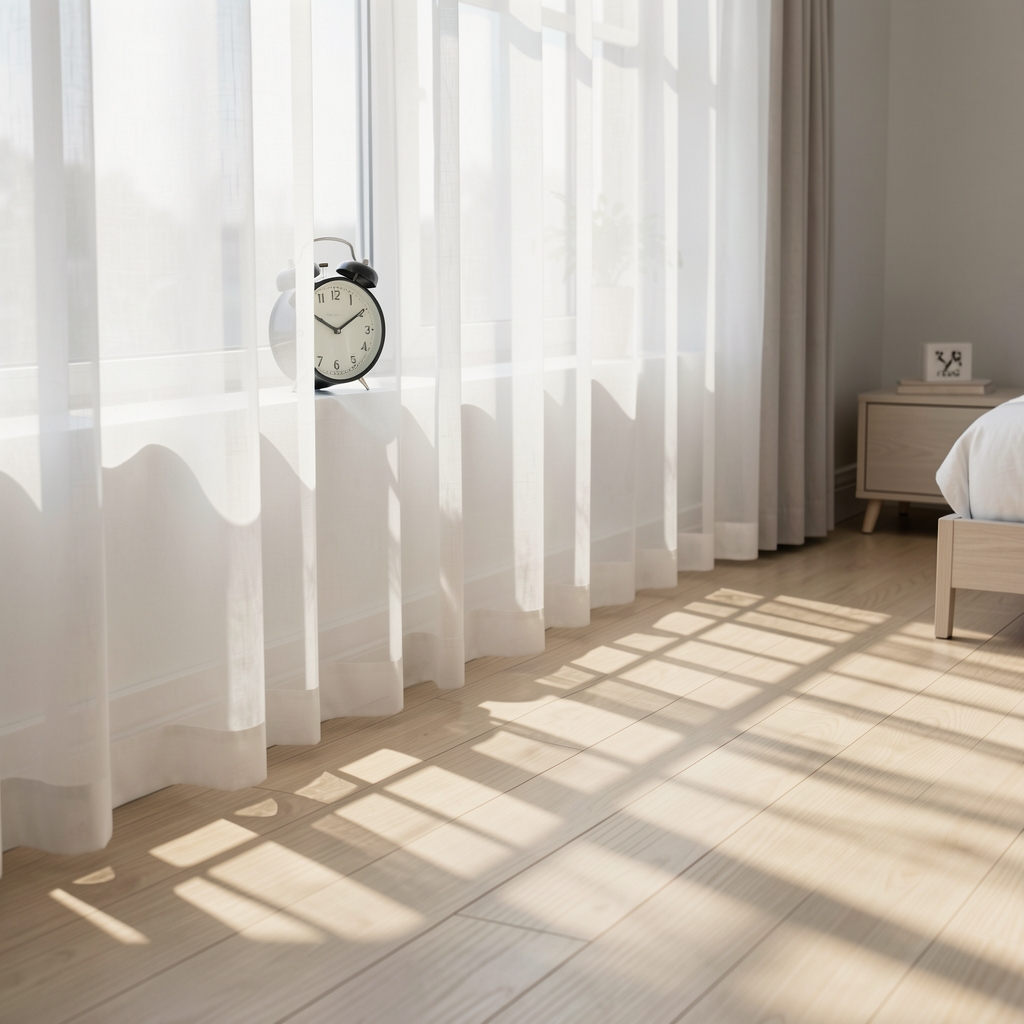
The hours preceding sleep hold a particular character that daily life often dissolves before they can form. There is, in the published literature on sleep architecture, a recurring observation: the body's transition into restorative rest is not a sudden event but a graduated dimming — and the conditions of the preceding two hours carry notable influence over the quality of what follows.
The Pre-Sleep Window
In the ninety minutes before sleep, the body begins a series of adjustments that are, in ordinary circumstances, largely automatic. Core temperature begins a gradual decline. Alertness softens. The eyes become less tolerant of bright light. These shifts represent the system arranging itself for overnight work — the consolidation of memory, the regulation of cellular processes, the cycling through distinct stages of rest.
What the evening routine can offer is an environment that does not interrupt this process. The conditions that tend to disrupt the transition — sharp artificial light, stimulating screen content, unresolved cognitive engagement, elevated room temperature — are not inevitable features of evening life. They are, in many cases, modifiable with modest attention to sequence and setting.
Published research on bedtime rituals consistently notes that consistency itself carries weight independent of any specific activity. The body appears to respond to repeated sequences as anticipatory signals. A particular sequence of events — the lowering of lights, a transition from active to passive activity, the physical preparation of the sleep environment — seems to function as a preparatory cue, drawing forward the physiological changes that accompany the onset of rest.
“Consistency itself carries weight independent of any specific activity. The body responds to repeated sequences as anticipatory signals.”
Light as a Primary Variable
Among the environmental variables that influence the body's preparation for rest, light holds particular significance. The relationship between light exposure and the production of melatonin — the body's primary rest-signalling compound — is well documented in published sleep research. Short-wavelength blue light, present in abundance in screen displays and in many modern LED lighting environments, suppresses melatonin production during the pre-sleep window in a way that can delay sleep onset and reduce the proportion of slow-wave rest that follows.
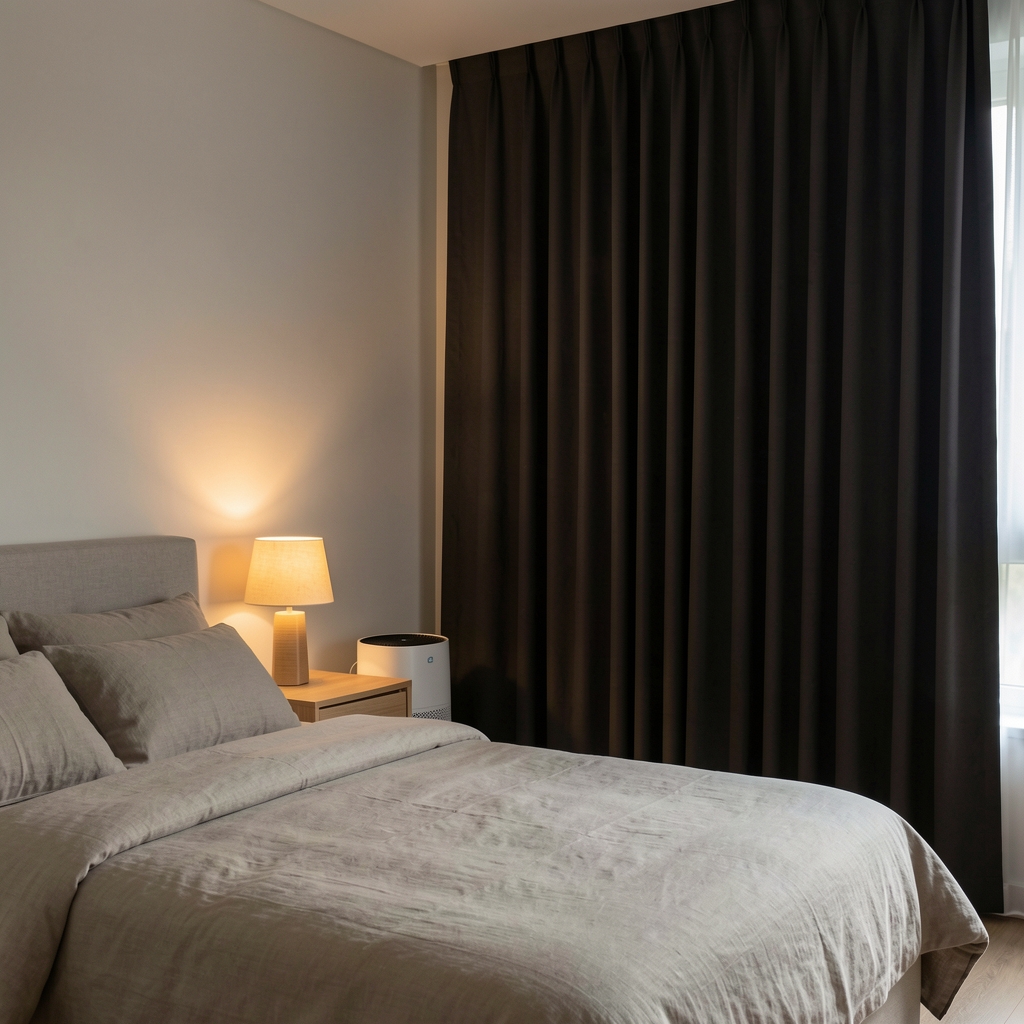
This does not require elaborate intervention. Dimming overhead lights in the hour or two before the intended sleep time, or transitioning to warm-toned lamps, represents a straightforward adjustment with a demonstrable effect on the pre-sleep biological environment. The specifics of the adjustment matter less than the direction of change: movement toward lower illumination intensity and warmer colour temperature.
Screen use in the period preceding sleep requires a more considered approach. The content itself, quite apart from the light emitted, maintains a degree of cognitive engagement that competes with the body's desire to reduce arousal. Where screen use before sleep is habitual, the adjustment of colour temperature and brightness does not fully substitute for the wind-down quality that lower-stimulation activities can provide.

Warm ambient lighting in the pre-sleep window. Photographed under studio lighting conditions.
Temperature and the Onset Window
The body's core temperature follows a circadian pattern, rising through the active day and falling in the evening in a shift that correlates with the onset of sleepiness. Research published across several decades has noted that this temperature drop is not merely a consequence of sleep but, to some degree, a precondition for it. Environments that hold the room temperature in the range of 16 to 19 degrees Celsius have, across multiple studies, been associated with faster sleep onset and a greater proportion of deep, slow-wave rest.
In UK homes, where central heating tends to produce elevated bedroom temperatures during the colder months, this variable is often the simplest to adjust with significant impact. The window left slightly open, the thermostat reduced, or the use of a lighter duvet in warmer seasons — each of these represents an engagement with a variable that published evidence consistently associates with improved rest quality.
The relationship between a warm bath or shower taken an hour before sleep and subsequent sleep quality is an interesting case: the apparent warming of the body surface that follows the bath is, in practice, a mechanism for facilitating the subsequent drop in core temperature through accelerated heat dissipation from the skin. Several published studies have used this finding to explain what many people report anecdotally — that a warm shower in the evening is followed by a more settled night.
Cognitive Wind-Down and the Transition to Rest
The mind's activity during the pre-sleep period represents a variable that is, in some respects, more challenging to manage than light or temperature. The day's unresolved tasks, forward-facing concerns about the following morning, and the habitual patterns of a mind accustomed to continuous engagement do not automatically quieten when the body lies down.
Published approaches to cognitive wind-down include scheduled journaling earlier in the evening — the deliberate act of noting unfinished tasks and next-day intentions in writing, which has been associated in several studies with reduced pre-sleep cognitive arousal and faster sleep onset. The act of externalising these concerns onto paper appears to serve the function of marking them as registered, reducing the mind's inclination to continue processing them during the transition to sleep.
Reading — particularly printed materials rather than screen content — occupies a particular place in this transition. It engages the mind in a directed, lower-arousal activity while simultaneously signalling withdrawal from active engagement with the day. Long-form reading, where sustained attention is required, appears to produce a quality of absorption that is meaningfully different from the fragmented engagement that shorter-form screen content tends to elicit.
Consistency as the Underlying Architecture
The specific activities that constitute an evening routine are, in the evidence, less important than their consistent repetition. A sequence practised across weeks and months acquires a functional quality that a newly introduced practice does not immediately possess. This is one of the reasons that recommendations framed around dramatic overhauls of the pre-sleep period tend, in practice, to underdeliver: they ask the body to respond to novelty, where what the body's rest system most reliably responds to is familiarity.
The sleep journal — the practice of noting observations about the character of each night's rest over time — offers a mechanism for identifying which elements of the evening sequence produce the most reliable effects in a particular person's experience. Sleep patterns are, to a significant degree, individual. Published population-level findings provide a useful framework, but the translation into personal practice requires the kind of longitudinal attention that only consistent personal observation can supply.
What emerges, from both the published literature and from accounts of those who report consistently restorative sleep, is a picture of quiet attentiveness rather than elaborate intervention. The evening routine, at its most effective, is not a complex protocol but a settled relationship with the hours before rest — one that has been shaped, gradually, by observation of what the body finds conducive to the overnight work it performs.
- The ninety-minute pre-sleep window is a period during which environmental conditions exert measurable influence on rest quality.
- Warm-toned, lower-intensity lighting in the evening supports the body's natural preparation for rest onset.
- Cooler bedroom temperatures — approximately 16 to 19 degrees — have been consistently associated with improved rest quality in published research.
- Scheduling writing or journaling earlier in the evening reduces pre-sleep cognitive engagement and supports faster rest onset.
- Repetition over time is the primary mechanism by which an evening sequence develops the quality of a genuine rest signal.